Monday, April 15, 2013

1926 road trip honeymoon paused at the Imperial Hotel


NOTE: This post is the third in a series of excerpts from the road trip diary Hazel Pierce kept on her honeymoon trip with husband Don Vickers in 1926. Along with the excerpts are some observations and comments from this blogger.

"On Saturday (May 1st) we drove to Montgomery. We enjoyed this trip very much. We crossed the
Perdido River and Escambia, also several small streams and big bridges. We went to a good picture show in
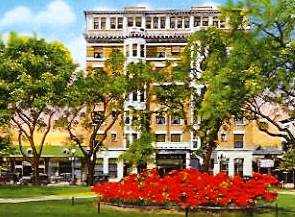
Shown here occupied by B. Wolff Furniture Store,
this building housed the Imperial Hotel
in downtown Montgomery in the 1920s.
Montgomery. We spent the night at the Imperial Hotel, which is a good place.

"On Sunday morning it was raining and we rested. After dinner we went up to the State Capital which is very pretty place. At present it is being repaired. After our sightseeing trip I wrote some letters while Don took a nap...


"...While in Montgomery the place was decorated with flags of every nation. The streets were full. All the
show windows were decorated with antiques. We saw guns and ammunition  used in the Civil War, and dresses that were worn in olden days, cooking utensils used then and many other things. They were quite different from what we have today."

Hazel did not record in her diary the route she and Don took to get from the town of Bay Minette to Alabama's capital city of Montgomery. But judging by the fact that they crossed the Perdido and Escambia rivers, it seems likely that they drove along U.S. 31.

In 1926, the American Association of State Highway Officials had just approved the U.S. numbered highways. So the new U.S. shields like the U.S. 31 here had just begun to appear around the country.
 

Monday, April 8, 2013

1926 honeymoon road trip included car ferries

Photo courtesy of Mobile Bay Vintage Photos.


NOTE: This post is the second in a series of excerpts from the road trip diary Hazel Pierce kept on her honeymoon trip with husband Don Vickers in 1926. Along with the excerpts are some observations and comments from this blogger.

"Friday (April 30th) morning we visited a little and bid the folks farewell. After dinner we made preparation to leave on the 2:30 [p.m.] boat for Daphne. We enjoyed the trip very much. We drove on to Bay Minette and spent the night at the Trammel Hotel."


A road connecting the western and eastern shores of Mobile Bay did not open until 1927. Before then, ferries such as the one above carried passengers between Mobile, Alabama, on the western shore of Mobile Bay to Daphne or Fairhope on the eastern shore. They also carried cars. Even small boats such as this one carried one or two cars parked on the open forward deck. You can see a photo of a similar boat loaded with cars at Photo-Graphic Art by John Lewis.

In 1927, the Cochrane Bridge Causeway opened and travel by car from one side of the bay to the other not only became easy, but a way of life. And bay boat ferries disappeared.


Monday, April 1, 2013

Honeymoon road trip, 1926 style


Above is the April 1926 wedding announcement for Hazel Lee Pierce (1905-1985). The announcement below her photo reads:

"Miss Hazel Pierce, who is a pretty brunette, is the daughter of Mr. and Mrs. B. Pierce of Wilmer. For the past two years she has been stenographer of Bedsole Dry Goods Company of Thomasville. Miss Pierce is to be married to Mr. D. A. Vickers April 29 and their honeymoon will be an extended trip through the northern states to Mammoth Cave, Niagara Falls and other points. They will make their home in Akron, Ohio."

The extended honeymoon trip was by car, which was quite an adventure over American roads in 1926. During the trip, Hazel wrote an account of their travels in a small notebook. This post begins a series of excerpts from that diary along with some observations and comments from this blogger.

The first entry begins:


"April 29, 1926

"Don and I were married in Mobile at the parsonage by Rev. McCan at six o’clock, on Thursday. Relatives
The Cawthorn Hotel as it once stood on Bienville Square
in downtown Mobile, Alabama.
and Friends were present.

"We were invited to take supper with Mr. & Mrs. McGee which we enjoyed very much. After supper
we went for a spin. That night we stayed at the Cawthorn Hotel."
 
Posted by Picasa

Tuesday, March 19, 2013

How did access to roads or railroads shape your ancestors' lives?


This early 20th century view of the Wilmer, Alabama, community shows a car coming up the road toward the Wilmer Store Company. The car is in the distance at the middle left side of the photo.

We tend to forget how much the coming of the automobile changed life in rural America. Before cars, any travel to major markets took a lot of time and effort. Storms turned dirt roads into rivers of mud. The rain flooded stream crossings and, if there were no bridge, travelers had to stop until the streams lowered enough to cross.

People traveling outside their own neighborhoods often had to move along poorly located roads that wound without apparent direction from farm to farm.

Where farmers lived within a short distance of a railroad, navigable river or good roads, they found they could make a lot more money by specializing. This means they devoted most of their acreage to growing a single crop for sale in the market rather than raising all the grains and meat they needed. They no longer had to provide everything they needed by their own hand.
 
Wilmer and other towns in western Mobile County sprouted up along a major road from Mobile to Hattiesburg, Mississippi. At one time the road was called Moffett's Ferry Road, named after the family who ran a ferry across the Escatawpa River near the state line. The name was eventually shortened to Moffett Road. The road later became a part of the federal highway system as U.S. Highway 98. The road name had different spellings, such as Moffatt, until 1986 when the Alabama Legislature declared "Moffett" to be the correct one.

Wilmer became an incorporated town in 1970. But 24 years later, Wilmer’s citizens grew tired of local political tomfoolery and voted to dissolve the incorporation.

In the 19th century and for most of the 20th century, Wilmer was a small farming town that served families with names such as Brannan, Moody, Pierce, Stringfellow, and Tanner. Today it is increasingly becoming a bedroom community for the city of Mobile and other areas.


Did your ancestors live near good transportation? How did access to roads or railroads shape their lives?

Wilmer Store Company image courtesy of the Erik Overbey Collection, University of South Alabama Archives (http://www.southalabama.edu/archives).

Wednesday, March 13, 2013

Any thoughts on how to identify family photo from about 1907?


Here is a cautionary tale.

I decided to use a move across country 20 years ago to clean out things I thought I didn't need anymore. Unfortunately, that included some family photos.

Many of those were photos were so out of focus or badly developed that they were totally unrecognizable by anyone. But it did include a few small  head-shoulder photos of unidentified people. All of the relatives who could have identified them were dead. So out they went.

At the time I didn't have a computer and the Internet was something that people called the Information Superhighway but didn't know much about.

Today, the Internet lets us connect to relatives we didn't know we had and who may be able to identify those unidentified photos.

Above is one of the many photos I did save. The family is not identified. But the photo is printed on a postal card stock with places on the back for a message, address, and stamp. After about 1907, this was a popular way to have photos made. They could be mailed or they could also be handed out to friends and family. Many of the photos from the Pierce side of my family were printed this way. But it also could be from my Poore side.

Although the people remain unidentified, I am hopeful they will be some day.

Have you been able to use the Internet to identify one of your old photos? Any thoughts on what other steps I can take to get this photo identified?
Posted by Picasa

Tuesday, March 5, 2013

How often does a car appear in the photos of your ancestors? What did it mean to them?


Ina Mae Pierce (1903-1977), right, poses with two of her friends in front of a large car. Ina Mae appears to be a teenager in this photo, making the date no later than around 1921. The young women's clothes and hairstyles make it clear that 1920s fashions had made their way to rural Wilmer.

Note the camera being held by the young woman in the middle. This camera, or one very much like it, belonged to the Pierce family and probably took many of their family photos. It is a simple box camera with a range viewfinder on the side. It required 120 film and still took good photos into the 1950s and '60s. I own this camera today.

Cars in the 1920s were more than just a prop for photos. They liberated young women, and men for that matter, from the restrictions of parents and their neighborhoods.

Cars were symbols of freedom of all kinds.

No longer did you have to take the time to hitch a horse up to a wagon. You could jump behind the wheel of a car, turn on the ignition and be off. Trips to the local stores could be made faster, providing more free time for having fun.

Cars were easy to operate and reliable. And fast. With speed came excitement.

Authorities and parents worried that young people, especially women, were finding the wrong kind of freedom and excitement in cars. More than one official fretted aloud that unmarried young men and women used cars to have sex.

How often does a car appear in the photos of your ancestors? How important was the car to their lives?


Posted by Picasa